Get In Touch
Let's Create
Something
Ready to level up your drumming, book a live performance, or discuss a studio project? Drop a message.
LocationWorldwide

Ready to level up your drumming, book a live performance, or discuss a studio project? Drop a message.
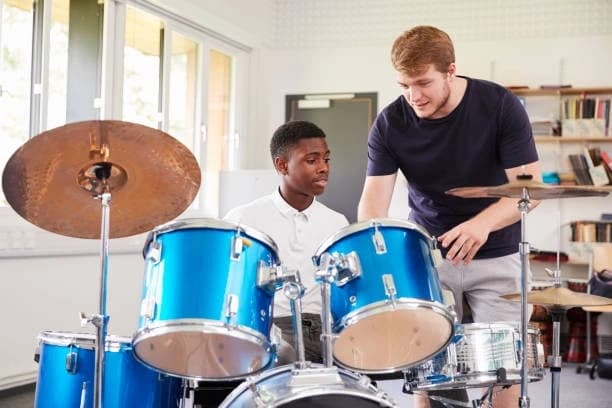
Learning to play the drums is a powerful way to boost brain power, improve coordination, and relieve stress. However, children and adults process rhythm, technique, and practice very differently. To be an effective instructor, you must adapt your teaching style to match the unique mindset of each age group.
For young learners, drum lessons must focus on fun, movement, and immediate engagement.
Adult students usually bring high motivation but also high self-criticism and physical stiffness.
Whether teaching an eight-year-old or a fifty-year-old, the ultimate goal remains the same: building a steady internal clock. By balancing the playful energy needed for children with the structured logic required by adults, you can help any student find their unique musical voice.