Get In Touch
Let's Create
Something
Ready to level up your drumming, book a live performance, or discuss a studio project? Drop a message.
LocationWorldwide
Ready to level up your drumming, book a live performance, or discuss a studio project? Drop a message.
They say size matters, but in the world of modern music production, it's all about how you use the square footage you have. For years, I believed that recording professional-grade drums required a cavernous room with 20-foot ceilings. I was wrong.Welcome to my tiny home music studio—a space that proves you don't need a warehouse to create a world-class sound. Here is how I turned a small corner into a drummer's ultimate creative sanctuary.In a small space, every piece of gear must earn its keep. My setup focuses on a compact electric kit: the NUX DM-8. It's the perfect option for a home studio, especially if you live in an apartment. It is quiet, multi-functional, and relatively affordable for a premium electric kit. In my opinion, it's the best choice for practicing, recording, and learning.The true beauty of a tiny home studio isn't just the gear—it's the access. Having my kit up and ready to go 24/7 means I can capture an idea the moment it strikes. There's no commute, no hourly studio fee, and no pressure.Whether you're recording session tracks for a client across the globe or just practicing your pocket, a small space is no longer a limitation—it's an advantage.
Read More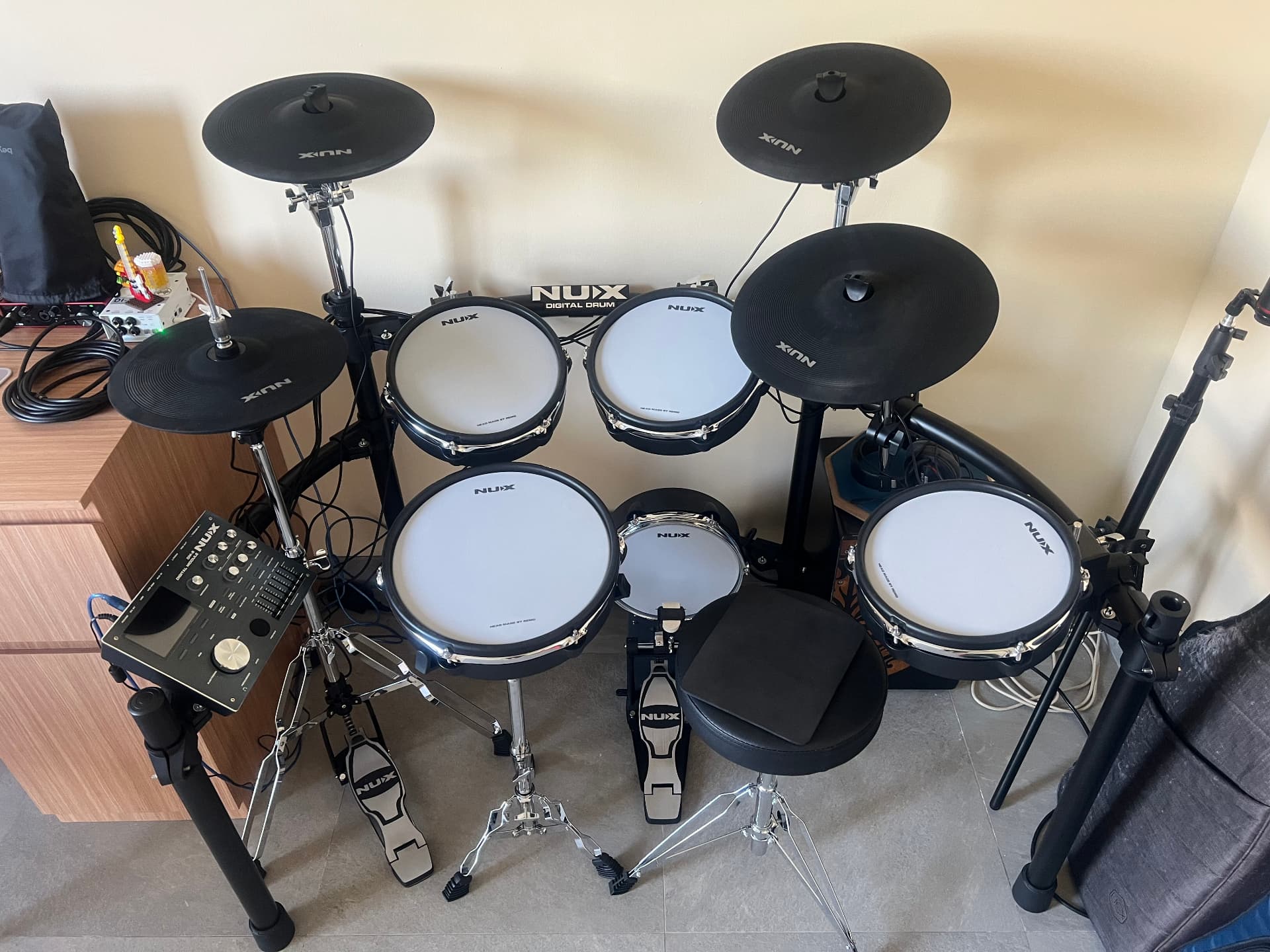
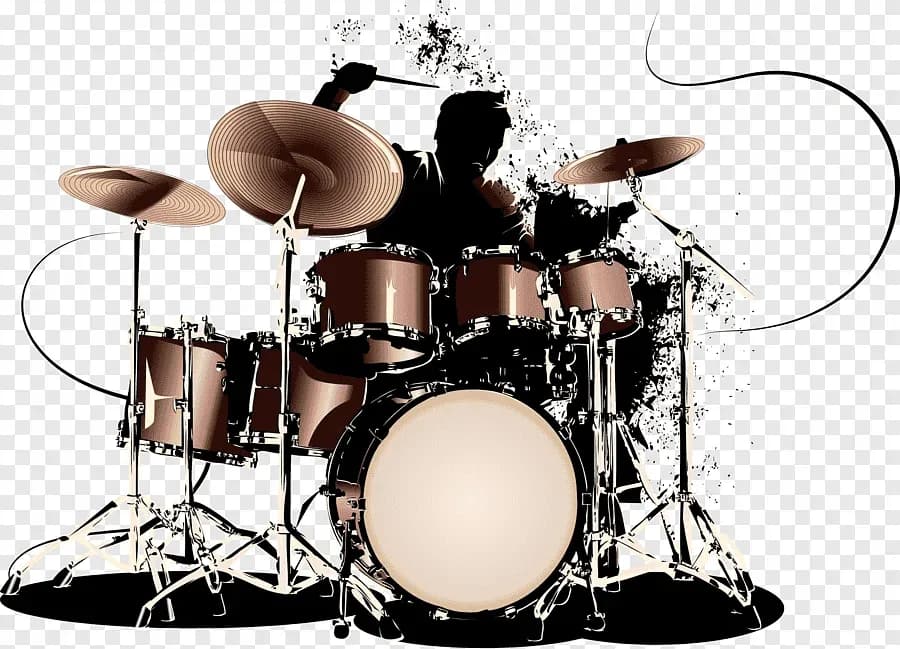
Choosing an instrument is like choosing a voice. For me, that voice wasn't found in a melody or a lyric, but in the physical, primal heartbeat of the drums. People often ask, "Why the drums?" and more importantly, "What keeps you practicing when your hands are sore and the patterns get complex?"#h2#Here is the story of why I pick up the sticks every day and the motivations that push me to reach the next level.#h2#The drums are the engine room of any band. While the guitarist might take the solo, the drummer controls the energy, tempo, and soul of the music. I chose the drums because of that unique responsibility.#ul##li#Physical Expression: Unlike many instruments, drumming is a full-body workout. It requires a blend of athleticism and artistry that provides a massive emotional release.#li##li#The Foundation of Music: There is a profound satisfaction in being the "glue" that holds a song together. When the rhythm is locked in, everyone else performs better.#li##li#A Universal Language: Rhythm is instinctive. You don't need to understand music theory to feel a great beat; it's a direct connection between the performer and the listener.#li##ul#Hitting a plateau is common in any skill, but the journey of a drummer is a constant chase for "the perfect flow." My motivation to level up comes from three core places:#ul##li#In drumming, "independence" means your four limbs can do four different things at once. Mastering a complex polyrhythm or a difficult Latin beat feels like unlocking a new part of your brain. That mental challenge is addictive; every time I master a pattern that once felt impossible, I'm motivated to find the next one.#li##li#I don't just practice for myself; I practice for the music. Leveling up my skill—whether it's improving my dynamic control or sharpening my timing—directly impacts the quality of the bands I play with. The better I am, the more freedom my bandmates have to explore.#li##li#There is a specific feeling, often called "the zone" or "flow," where the sticks feel like extensions of your arms and you aren't "thinking" about the notes anymore. Reaching that state more consistently is my ultimate goal. Every hour spent on a practice pad is an investment in reaching that effortless peak performance.#li##ul#Choosing the drums was about finding a way to impact the world through rhythm. The motivation to level up isn't about being "the best"; it's about being better than I was yesterday and discovering just how much power a single beat can hold.
We've all been there: you stare at your drum kit, and it feels more like a chore than a passion. Maybe you had a long day at work, or maybe your brain just isn't “clicking” with that polyrhythm you've been trying to master.#h2#The good news? You don't have to grind through a grueling session to keep moving forward. Here is how I handle those lazy days while still keeping the momentum alive.#h2##h3#1. The "Five-Minute" Rule#h3#Tell yourself you'll only play for five minutes. Set a timer, sit down, and just mess around. No metronome, no specific goals—just hit things. Usually, once the sticks are in your hands, the "laziness" evaporates. If it doesn't? Stop after five minutes. At least you touched the kit today.#h3#2. Practice Away from the Kit#h3#If the thought of sitting behind the drums feels like too much effort, take it to the couch. Grab a practice pad or even just use your knees. Work on a simple rudiment while watching a movie or listening to a podcast. It's low-pressure and keeps your muscle memory sharp without the physical tax of a full-kit session.#h3#3. Deep Listening#h3#Active listening is just as important as physical practice. Put on a pair of headphones, close your eyes, and pick a song. Instead of just "hearing" it, track exactly what the drummer is doing. How are they using the hi-hat? Where are the ghost notes? You're feeding your musical brain, which is a massive win for your next real practice.#h3#4. Organize and Maintenance#h3#If I'm not in the headspace to play, I use that time to "show love" to the gear. Wipe down the cymbals, tune that snare drum that's been sounding a bit flat, or organize your stick bag. It keeps you connected to your instrument and makes the kit much more inviting for tomorrow.#h3#5. Permission to Rest#h3#Sometimes, your body and mind are genuinely exhausted. Forcing a bad practice session can lead to burnout or even injury. It's okay to take the day off. Watch a drum cover on YouTube for inspiration, get some sleep, and come back with fresh ears the next day.#h3#The Bottom Line: Consistency doesn't always mean "intensity."#h3#Even on your laziest days, a small touchpoint with music keeps you in the game.
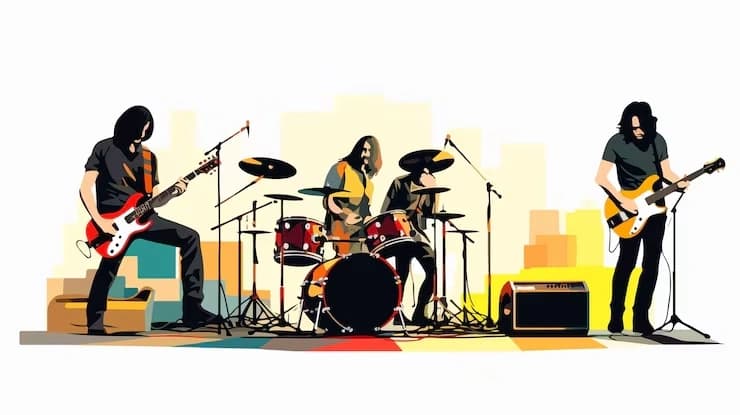
While solo practice builds technique, jamming with other musicians is where you truly become a musician. Stepping out from behind the practice pad and into a room with a bassist, guitarist, or full ensemble transforms drumming from a physical exercise into a dynamic, social conversation.#h3#1. Sharpen Your Internal Clock#h3#Playing solo or even to a click track is reactive, but in a group, you provide the pacing and feel internally. Jamming forces you to develop a rock-solid sense of time because your bandmates rely on you to drive the rhythm. It teaches you to hold a steady tempo even as the energy and volume of the room fluctuate.#h3#2. Learn the Art of Active Listening#h3#Listening is arguably the most critical skill for any drummer. When you jam, you learn to:#ul##li#Lock in with the bass: Syncing your kick drum with the bass line creates a tight, powerful unit.#li##li#Respond to cues: You'll learn to pick up on non-verbal signals like nods or eye contact to signal transitions, bridges, or the end of a song.#li##li#Adjust dynamics: You quickly realize that if you play too loudly, you drown out the melody; jamming teaches you how to blend your sound with others.#li##ul##h3#3. Rapid Skill Growth#h3#Many drummers find they improve more in two months of playing with a band than in two years of solo practice. Jamming exposes you to different styles and forced creativity. You'll learn to recover quickly from mistakes—an essential skill for live performance—and avoid "drum noodling" by playing only what serves the song.#h3#4. Networking and Community#h3#Jam sessions are the ultimate networking tool. They are a great way to meet other musicians, find potential bandmates, and get noticed for future gigs. Beyond the professional benefits, it fosters a sense of belonging and makes the process of learning drums far more enjoyable.How to Start Jamming#ul##li#Listen first: Observe the musical conversation for a few bars before jumping in to understand the groove.#li##li#Be a "rhythmic anchor": Focus on a simple, repeated pattern that gives others a solid foundation to play off of.#li##li#Embrace mistakes: Jamming is for experimentation; don't be afraid to fail, as it often leads to creative breakthroughs.#li##ul##h3#Final Word: Attitude is Everything#h3#In a jam environment, your attitude often matters more than your technical ability. Be the drummer who listens, makes eye contact, and plays for the song rather than for themselves. If you focus on making the other musicians sound better, you'll be the first person they call for the next session.
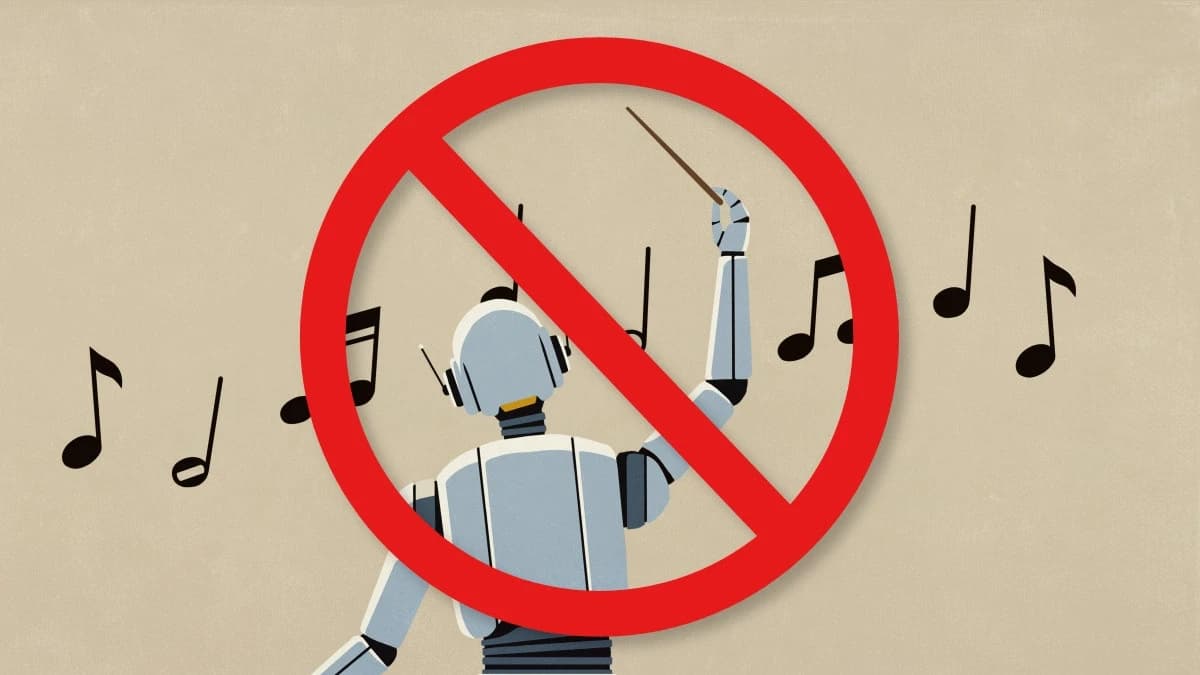
Artificial Intelligence has rapidly entered nearly every industry in the world, and music is no exception. Many people celebrate AI as a revolutionary tool that can generate songs, melodies, and even full productions within seconds. On the surface, it sounds exciting and convenient. But behind that convenience lies a serious problem that is slowly destroying the value of real musicianship and artistic expression.Today, anyone can whistle a melody, record a simple beatbox rhythm, or type a few prompts into an AI generator and instantly receive a finished track. No years of practice. No understanding of music theory. No emotional investment. No artistic journey.Sounds impressive, right?But take a moment to think about what is happening behind the scenes.Streaming platforms are now being flooded with millions of AI-generated tracks. These platforms have become digital garbage collectors filled with mass-produced, emotionless content generated in seconds. Meanwhile, real musicians — people who spend months or even years writing, practicing, recording, and refining their art — are being buried under an endless wave of robotic noise.Talented artists release songs crafted with passion, emotion, and human experience, only to receive little to no attention because algorithms are overwhelmed by quantity instead of quality.And this is where the real danger begins.Many people who strongly support AI-generated music do not fully understand how real art is created. Creating something truly unique takes time, discipline, sacrifice, creativity, and emotional depth. Great music is not just sound — it is experience, personality, struggle, and soul translated into art.Taking shortcuts may give instant results, but it also removes the learning process that shapes real artists.Imagine visiting an international music exhibition where companies from around the world present instruments, amplifiers, recording equipment, and innovative technology.You stop at a drum company’s booth and ask:“Why would anyone spend years learning drums when AI can generate any beat instantly?"That question alone reveals a complete misunderstanding of what music truly is.Drumming is not simply about producing rhythm. It develops coordination, discipline, timing, creativity, groove, emotion, and human expression. Even basic limb independence exercises require intense practice and mental focus. A real drummer brings dynamics, feel, imperfections, energy, and personality into music — things that algorithms cannot genuinely replicate.Most importantly, the drummer often defines the pulse, energy, and character of an entire composition.AI can imitate patterns, but it cannot replace human experience.Unfortunately, many people today are more interested in instant gratification than artistic growth. Clicking a button to generate a track and posting it online does not make someone a musician in the traditional sense. Real musicians dedicate years of their lives to mastering their craft.This is not an argument against technology itself. AI can be a useful tool in certain areas of production and workflow. But when artificial generation begins replacing human creativity instead of supporting it, the industry loses its soul.If you are a real musician, artist, producer, or listener who still values authentic human expression, support real art:#ul##li#Support independent musicians - Learn real instruments#li##li#Attend live performances#li##li#Promote human creativity#li##li#Think carefully before supporting AI-generated music designed to replace artists instead of empowering them#li##ul#Music was never meant to be manufactured like disposable content. It was meant to connect human beings through emotion, imperfection, and truth.
Yes, practicing musical genres you do not enjoy is one of the fastest ways to become a superior drummer. While it is tempting to stick strictly to your favorite playlists, stepping outside your comfort zone unlocks critical technical and creative benefits. It transforms you from a hobbyist into a versatile musician.#h2#Expanding Your Technical Toolkit of every musical style relies on unique physical mechanics and muscle groups.#h2##ul##li#Jazz develops unparalleled independent limb control, feathering techniques, and dynamic stick control.#li##li#Latin and Afro-Cuban rhythms build complex coordination through syncopated polyrhythms and ostinatos.#li##li#Funk and R&B sharpen your internal clock, teaching you how to lock into a deep pocket and manipulate micro-grooves.#li##ul#By avoiding these genres, you miss out on the specific physical workouts that make your hands and feet more adaptable.#h3#Cross-Pollination of Creativity#h3#Playing only one style leads to predictable, repetitive drumming. When you study disliked genres, you naturally bring those foreign concepts back into your preferred style. A metal drummer who learns jazz can inject blistering fills with newfound subtlety and ghost notes. A pop drummer who studies reggae can add fresh, syncopated accents to standard radio beats. This cross-pollination is how unique personal styles are born.#h3#Professional Versatility#h3#If you ever want to play in a cover band, do session work, or pass music school auditions, versatility is your currency. The music industry rarely hires drummers who can only play one rhythm. Learning to play genres you dislike builds empathy for how different instruments interact, turning you into a better listener and a highly employable bandmate.#h3#Embrace the discomfort. You do not have to love the music to love what the music does for your hands.#h3#Personally, there are some genres I don't like. I can't say they are bad; we all just have our own taste. Sometimes I have to force myself to learn certain grooves. Even when my nervous system feels like it is exploding like a balloon, the results afterward make me think differently.Let's be more open-minded, reduce the negativity, and respect every musician in every genre. Even if you don't like a specific style, our support is a small part of creating a friendly and healthy music community.
Hitting a wall when learning a new drum beat or rudiment can be incredibly frustrating. When your hands and feet refuse to cooperate, stress levels spike, tension builds, and your playing actually gets worse.#h2#Here is how to reduce stress and break through your drumming plateaus.#h2##h3#Deconstruct the Pattern#h3##ul##li#Isolate limbs: Practice the feet alone, then the hands alone, before combining them.#li##li#Simplify the beat: Remove the ghost notes or complex cymbal embellishments first.#li##li#Master the core: Get the basic groove solid before adding back the details.#li##ul##h3#Manipulate the Tempo#h3##ul##li#Drop the BPM: Cut the speed in half to give your brain time to process.#li##li#Ignore the click: Turn off the metronome temporarily to find the physical flow.#li##li#Gradual acceleration: Only increase speed by 5 BPM once you play it perfectly 10 times.#li##ul##h3#Change Your Physical Approach#h3##ul##li#Drop your shoulders: Tension kills speed and fluid movement on the drums.#li##li#Breathe deeply: Consciously inhale and exhale to keep your muscles supplied with oxygen.#li##li#Lighten your grip: Squeezing the sticks tightly causes fatigue and mental stress.#li##ul##h3#Manage Your Practice Psychology#h3##ul##li#Walk away: Take a 10-minute break when anger starts to affect your technique.#li##li#Take a multi-day reset: Hit a total wall? Walk away from the kit completely for 1 to 3 days.#li##li#Sleep on it: Your brain processes muscle memory overnight while you rest.#li##li#Disconnect and recharge: Shift your mind entirely to relaxing activities like getting a massage.#li##li#Return with fresh eyes: Come back after your break with a calm mindset and rested muscles.#li##li#Play a win: End your session by playing a favorite song you already know well.#li##ul#
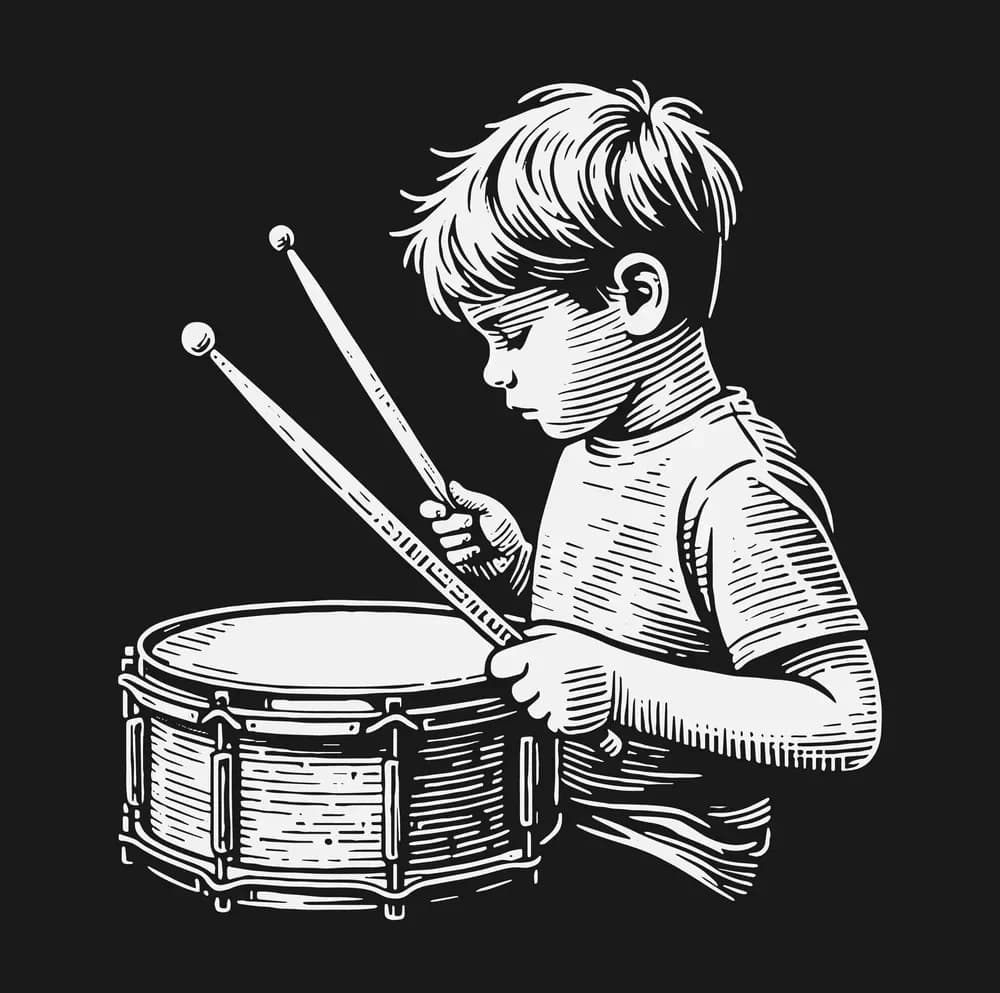
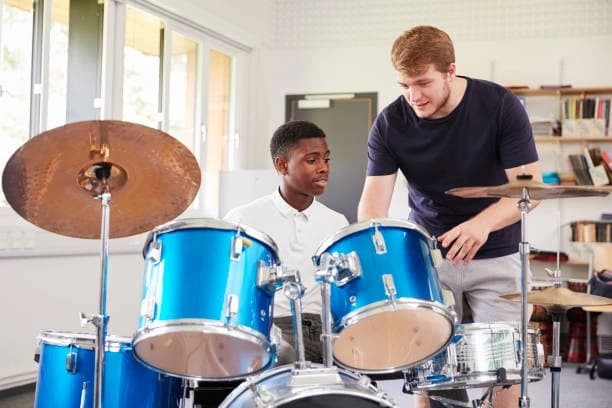
Learning to play the drums is a powerful way to boost brain power, improve coordination, and relieve stress. However, children and adults process rhythm, technique, and practice very differently. To be an effective instructor, you must adapt your teaching style to match the unique mindset of each age group.#h3#Teaching Kids: Gamification and High Energy#h3#For young learners, drum lessons must focus on fun, movement, and immediate engagement.#ul##li#Short attention spans: Keep lessons fast-paced. Switch activities every 5 to 10 minutes to maintain focus.#li##li#vGamify the fundamentals: Turn basic rudiments into games. Use animal names or food words to teach rhythm patterns (e.g., "or-ange" for eighth notes).#li##li#Physical limitations: Use smaller sticks (like 7A) and ensure the drum kit is physically adjusted so they can reach the pedals comfortably.#li##li#Positive reinforcement: Celebrate small victories instantly. High-fives, stickers, and praise keep motivation high.#li##ul##h3#Teaching Adults: Analytical Learning and Managing Expectations#h3#Adult students usually bring high motivation but also high self-criticism and physical stiffness.#ul##li#Conceptual understanding: Adults learn intellectually before mechanically. Explain why a groove works and break down the sheet music structurally.#li##li#Managing frustration: Adults expect rapid progress and get discouraged by physical limitations. Remind them that muscle memory takes time to build.#li##li#Anatomical focus: Emphasize ergonomics, grip, and posture early on. This prevents injury and helps overcome adult joint stiffness.#li##li#Goal-oriented lessons: Tailor the curriculum to their tastes. Let them learn using the specific genres or songs they already love.#li##ul##h3#The Universal Bridge: Patience#h3#Whether teaching an eight-year-old or a fifty-year-old, the ultimate goal remains the same: building a steady internal clock. By balancing the playful energy needed for children with the structured logic required by adults, you can help any student find their unique musical voice.